
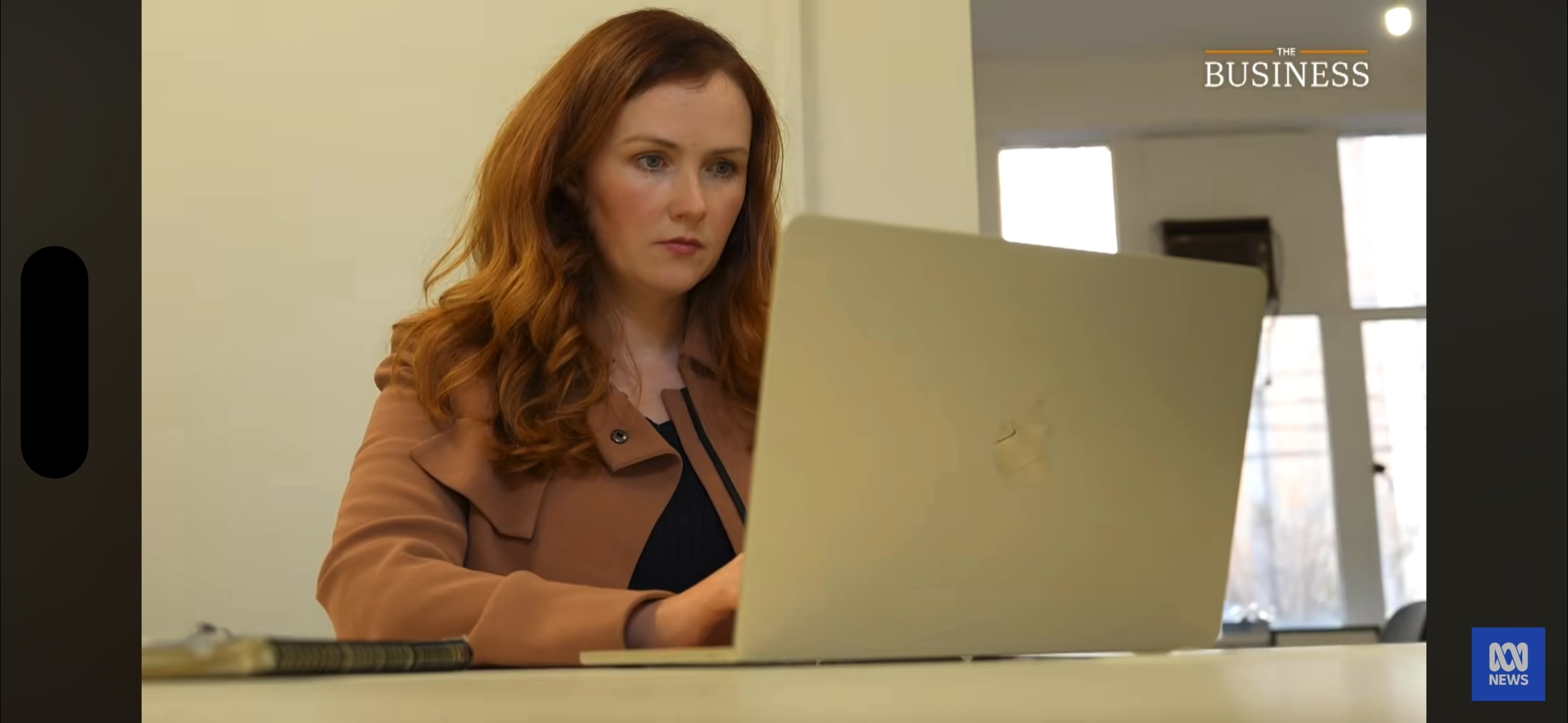
McKell’s Chief Economist Alison Pennington was interviewed by Australian Broadcasting Corporation (ABC) The Business to discuss the latest labour force data. Read her full brief below.
Unemployment didn’t spike last month. In fact, it came down from 4.5% to 4.4%. This shows global economic shocks are being muted by the government’s fuel excise cut (extended to end-July). But there are signs employers are handling our slowing economy, fatigued by higher prices and 3 rate rises this year, by cutting workers’ hours rather than jobs.
– Underemployment inched up to 6%
– Hours worked across all jobs are down 21.5m hours
– Jobs we lost last month did not come back this month in equal quality. More full-time jobs were lost last month, while 90% of the growth in employment this month was part-time.
In my interview for Australian Broadcasting Corporation (ABC) The Business today, I explained that small reductions in inflation and unemployment are encouraging but why we can’t be complacent.
The situation has improved in the Middle East, but damage to energy supply chains will be felt in months to come. There are signs business is starting to pass on higher energy input costs to prices, particularly in housing construction. And we’re yet to see impacts of higher fertiliser prices on food prices.
We also can’t be complacent because headline unemployment figures are just the tip of the iceberg when it comes to struggles Australians are facing in the job market right now.
Millions of people can’t get suitable jobs that provide enough hours and pay. Most are outside formal unemployment statistics (‘marginally attached’ or unable to work in next 4 weeks). Almost 1 million Australians or 7% of all employed people are now working 2 or more jobs – a record high. It’s a pressure cooker out there!
Those with weaker connections to the job market suffer more when labour markets soften. Youth unemployment is over 10%, more-than-double the adult rate. But this isn’t a full measure of how many young people are not getting the job opportunities they need. Over 15% are underemployed. Add in those who want to work but couldn’t in next 4 weeks or are discouraged (additional 200,000), and the number of underutilised youth is closer to 850,000.
The RBA will be concerned with even piecemeal improvements in the labour market like today’s, and threaten rate hikes. But the answer to inflation control isn’t carnage for working people and their kids in unemployment and higher interest rates.
To avoid recession and keep people in jobs earning sufficient incomes, we need new tools to manage the tides of inflation which will keep crashing on our shores. But also to manage domestic inflation in services where privatisation and deregulation have unleashed forces undermining efficiency, quality, supply and price stability. These tools already exist in the government’s arsenal – price controls, regulation, and public delivery of high-cost items like electricity, housing, childcare and healthcare.
We are not going to handle the mammoth investment and coordination tasks thrown up by today’s global moment with monetary policy.
SOCIAL SHARE